
Unified Model Approach
September 22, 2026
A significant advancement in healthcare delivery has been the Unified Model Approach, originally known as the “one model approach.”
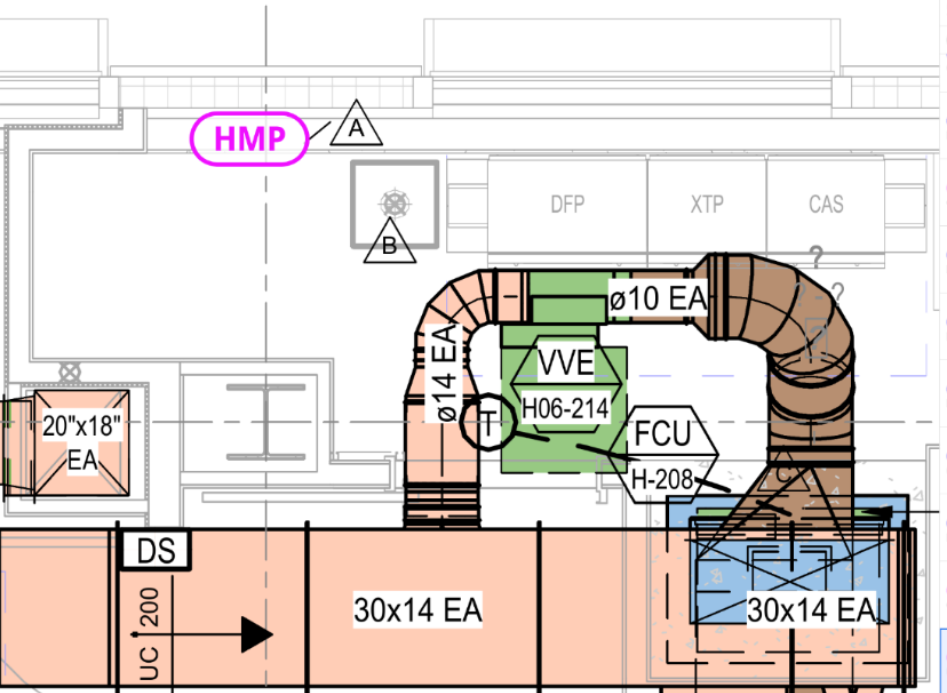
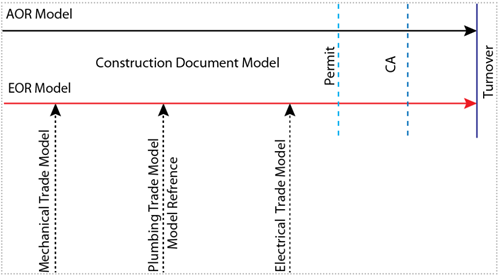
The Unified Model Approach is grounded in a simple but transformative principle: building systems are authored once, by the most appropriate party at the right time, and then leveraged downstream by the entire project team. This changes how project teams traditionally approach modeling and coordination.
Instead, model authorship is intentionally transitioned earlier to trade partners. Their detailed, constructable models become the foundation for coordination, permit submission, and construction execution. Designers maintain control of design intent by referencing and annotating these trade-authored models directly, resulting in permit drawings that are coordinated, traceable, and grounded in real constructability.
First deployed on the a confidential first-of-its-kind fully electric hospital in San Jose, this methodology has since been successfully applied to complex healthcare projects including confidential state-of-the-art acute care hospital facility in Mission Viejo, UCSF Benioff Children’s Hospital Oakland, and UCSD Outpatient Pavilion.
Benefits
From a constructability standpoint, the impact is significant. By embedding trade detailing directly into the design process, constructability considerations are addressed while design decisions are still flexible, not after they are locked. Spatial constraints, installation requirements, access clearances, and maintenance considerations are resolved earlier in the process, reducing downstream rework and minimizing the disconnect between permitted design and what is buildable in the field.
The Unified Model Approach also transforms coordination. Because trade partners are engaged at the point of model authorship, coordination begins earlier and with greater transparency. The model becomes a shared production environment rather than a handoff deliverable, improving communication between designers, trade partners, and builders. Design changes are immediately visible, and their impacts are understood in real time, reducing friction and maintaining alignment as the project progresses.
One of the biggest advantages for healthcare projects is improved cost certainty. Earlier trade involvement produces more reliable quantities, validated routing, and installation-driven layouts during design rather than after bid or GMP establishment. This reduces late-stage design changes, minimizes scope gaps, and supports more accurate estimating and procurement.
By eliminating redundant modeling and reducing rework associated with traditional workflows, the Unified Model Approach shortens feedback loops, stabilizes scope earlier, and contributes directly to more predictable cost and schedule outcomes.
Closing Perspective
While the Unified Model Approach requires greater upfront planning, clear definition of model responsibilities, and a shared commitment from all stakeholders, the benefits are substantial. It replaces fragmented workflows with continuity, transforms models into true construction tools, and aligns design intent, constructability, and cost certainty earlier than traditional delivery methods. For healthcare projects where coordination and reliability are critical, this approach has proven valuable.