
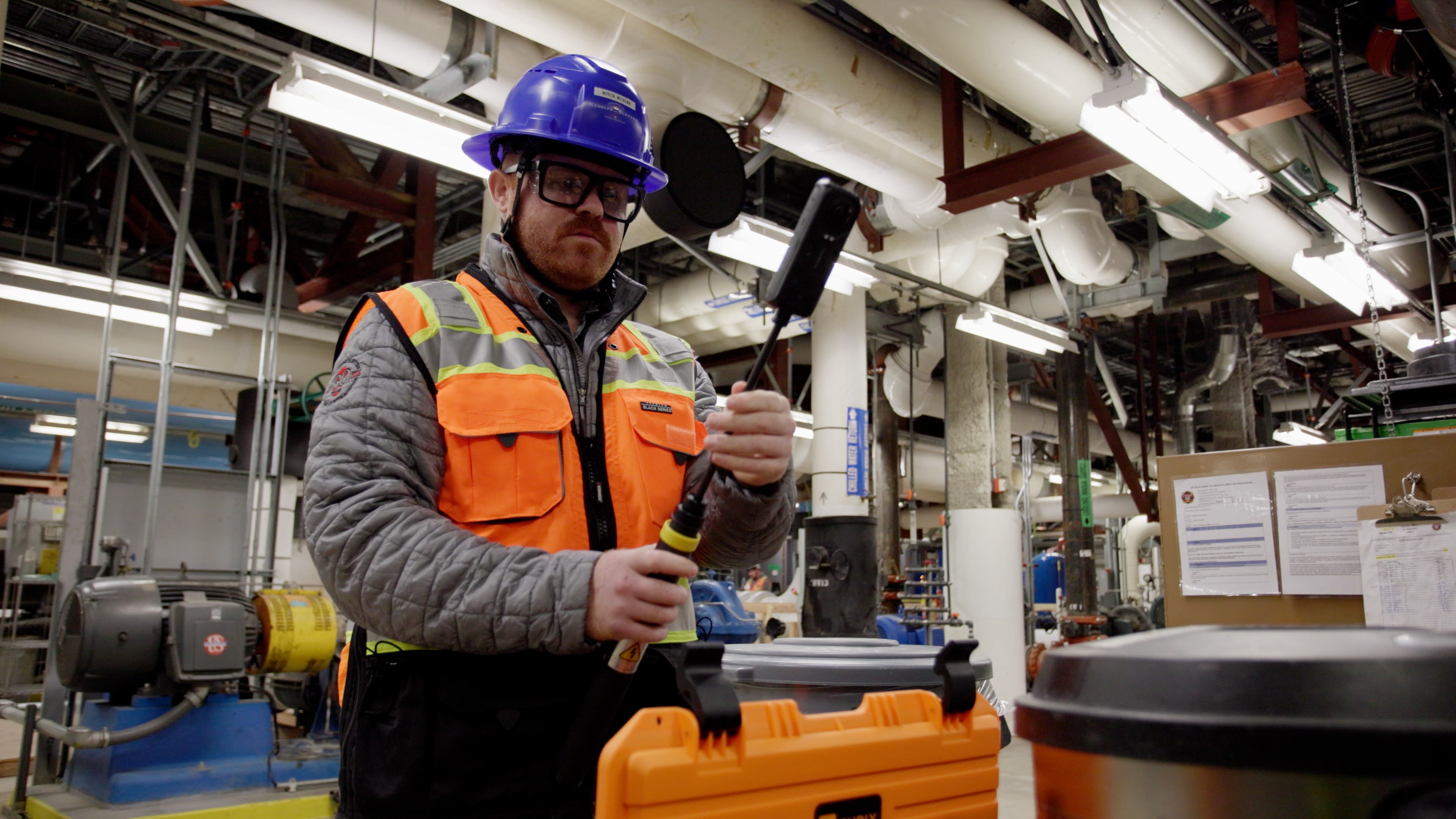
Rudolph and Sletten, Inc. Standardizes on Cupix for Site Documentation
CUPIX and Ryan Shilling, Rudolph & Sletten
May 6, 2026
Photos by Eugene Huang.
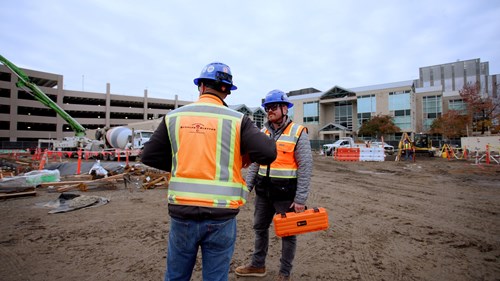
Construction is a physical, hands-on industry, where mud-caked boots and empty concrete trucks signal how far a project has gotten each day.
For Ryan Shilling, Director of VDC at Rudolph and Sletten, Inc., technology has become just as critical in tracking that progress.
“We’re in an era where the digital world is becoming more and more a part of what we do every day,” says Ryan. “One of my favorite parts of working in construction right now is seeing how we can implement this digital world into the real world.”
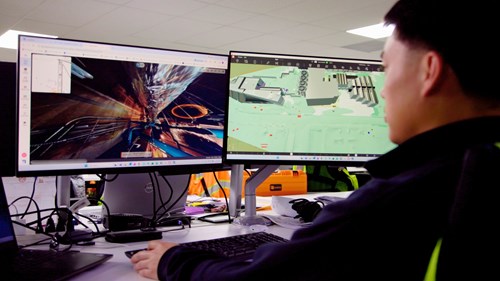
Since 2018, Cupix has played a key role in Rudolph and Sletten’s efforts to connect the physical and digital jobsite. By linking BIM teams working in models with field teams on site, Ryan and his team have made site documentation accessible to everyone who needs it.
Trying out new technologies
Founded in 1959, Rudolph and Sletten has grown into a leading general contractor in California, with five offices and a focus on healthcare, high-tech, education, and commercial markets.
As a subsidiary of Tutor Perini, the company continues to push digital innovation and demonstrate what new tools can deliver.
“We’ve proven that we can roll out new technologies, find use cases, and build processes around them,” says Ryan. “Those processes are then reviewed and applied more broadly.”
In 2018, the team identified several challenges with their existing approach:
Limited tools that could not keep up
“We were using tools like Multivista, and they worked at the time,” says Ryan. “But we were ready to expand beyond those tools.”
Disconnected teams
BIM detailers and field teams operated in separate platforms, with no easy way to share field captures.
Need for a simplified tech stack
The goal was to reduce overlap and adopt platforms that perform specific functions well.
Desire for a collaborative partner
“We wanted a partner who would work with us, not just collect a paycheck,” Ryan explains.
Implementation Spotlight - See a need, fill a need
A key contributor to Cupix’s successful rollout was Juan Alcaraz, a BIM Manager in the San Diego region with nine years at Rudolph and Sletten. At the time of implementation, COVID restrictions significantly limited jobsite access, with only essential personnel permitted in the field. Juan championed the practical deployment of Cupix to ensure continuity of site documentation when traditional site walks were no longer feasible. His leadership helped maintain visibility between field and BIM teams during a critical period and accelerated adoption when reliable, remote access to current jobsite conditions became essential.
From vendor to valued partner
Rudolph and Sletten’s technology initiative group meets regularly to review new tools. When Cupix was introduced, input from superintendents, project managers, and executives was critical.
“We had multiple meetings with superintendents and field foremen early on,” Ryan recalls. “Anytime you ask someone to use a different tool, they’ll tell you why they prefer what they already know.”
What stood out about Cupix was not just the technology, but the partnership.
“Cupix was very open to our feedback,” says Ryan. “Our field teams would request features, and Cupix incorporated that feedback into future updates.”
Integrations with Procore and Revizto were also key to adoption across teams.
“We focus on reducing the number of platforms where issues are tracked,” Ryan says. “We’re often reviewing Cupix alongside Revizto in meetings.”
This integration helped solve a major challenge: getting BIM teams to consistently use field data.
“A lot of detailers work in the model and don’t always reference field capture,” Ryan notes. “Connecting the two makes them more engaged and curious.”
The Procore integration also drove field adoption.
“Cupix’s integration with Procore made rollout possible,” Ryan says. “At first, field teams weren’t sure how to use 360 photos, but now they rely on them to make decisions.”
What stood out about Cupix was not just the technology, but the partnership.
Creating value at every project stage
Rudolph and Sletten has integrated Cupix across the full project lifecycle, delivering measurable benefits at each phase:
Preconstruction
Reduced travel and improved safety
Initial captures limit the need for repeat site visits.
“Anytime you go to a jobsite, there’s risk,” Ryan says. “We can gather what we need without going back and forth.”
Faster than laser scanning
Cupix is often about 50% faster and more cost-effective for capture needs. Laser scanning still plays a role when model-level precision is required.
Construction
Streamlined data access
Initial captures limit the need for repeat site visits.
“Anytime you go to a jobsite, there’s risk,” Ryan says. “We can gather what we need without going back and forth.”
Improved BIM coordination
Cupix’s BIM features, especially the integration with Revizto, make it easier for BIM teams to track issues in both environments.
“If we didn’t have Cupix, BIM teams would be disconnected from the field,” Ryan says.
Faster pay applications
Since payment applications require showing progress against the schedule of values, Ryan says Cupix expedites this process, compared to a 2–3 week turnaround for laser scanners.
Stronger client communication
Architects, engineers, and construction teams reference Cupix during meetings to make informed decisions based on current field conditions.
Punchlists and Handover
Visual punchlist tracking
Field teams use captures to identify and resolve outstanding work.
As-built documentation
Clients can access 3D maps for future maintenance and operations.
Using Cupix across all projects
Rudolph and Sletten’s long-term investment in Cupix has made it a standard tool across projects, even when not contractually required.
“We’ve determined that Cupix is a superior tool,” says Ryan. “In some cases, we even perform dual capture to meet both client requirements and our internal standards.”
The platform is now deployed across all five California offices.
“If we’re using reality capture, it’s coming from Cupix,” Ryan confirms.
On a large hospital campus exceeding 600,000 square feet, the team captures multiple areas daily using several devices.
“We’re rolling out four devices to increase coverage across the project,” Ryan says.
The company is also leveraging SiteInsights, Cupix’s AI-powered progress tracking tool.
“It helps clearly communicate where we are versus where we should be,” Ryan adds.
Looking back and looking ahead
When asked what it would be like without Cupix, Ryan is direct:
“If we didn’t have Cupix on our projects, we would be going back in time. We’d be in an era where people are just constantly writing on paper and handing it to another person and another person. You’re just going to have an environment of photos that have no context.”
But with Cupix, “you take a photo, and everyone has access to it,” he says.
“We’ve built a strong partnership, and we’re both benefiting from it,” Ryan says.
The value has continued to grow over time, shares Ryan.
Today, more than 440+ Rudolph and Sletten team members are actively using Cupix across projects.
For a company focused on capturing reality, Cupix has become more than a tool. It is a key connection point that keeps teams aligned and projects moving forward.
For more information, please visit:
Cupix Story: https://www.cupix.com/resources/rudolph-sletten-standardized-reality-capture-software-cupix
Video about Cupix: https://www.youtube.com/watch?v=qTagMwTkHAQ